
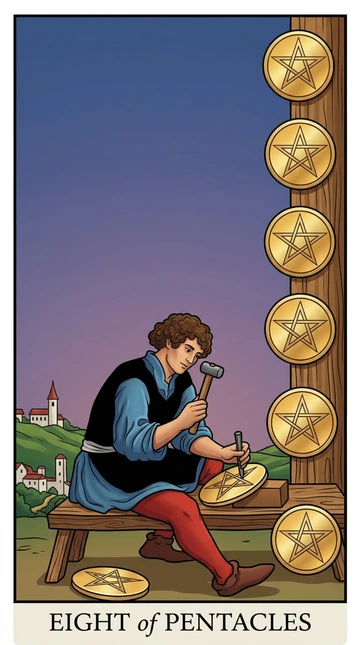
What Eight of Pentacles signals in this area
The Eight of Pentacles, when appearing in a wellbeing and health context, often points towards a period of focused effort and practical application concerning one's health. It suggests a need for dedication to a specific health regimen or a commitment to learning more about one's body and its needs. This card can indicate the importance of consistent, small steps rather than seeking quick fixes.
For physical health, it might signal the need to meticulously follow a diet plan, stick to a new exercise routine, or diligently attend rehabilitation sessions. It’s about the craftsmanship of building better health habits over time. In terms of mental clarity, the Eight of Pentacles suggests that improving focus or mental discipline requires sustained practice, perhaps through mindfulness exercises or structured learning.
Regarding self-care, rest, and emotional balance, this card highlights the value of establishing and maintaining routines. It’s about the deliberate practice of self-care, seeing it as a skill to be honed. This could mean consistently setting boundaries, regularly scheduling downtime, or working steadily through emotional patterns with a therapist or through personal reflection. The card emphasises that true balance and wellbeing are often achieved through diligent, ongoing effort.
When Eight of Pentacles appears reversed
A reversed Eight of Pentacles in a health and wellbeing context can suggest a lack of dedication or a feeling of being overwhelmed by the effort required. It might point to cutting corners in a health plan, skipping essential steps, or a reluctance to put in the necessary work for improvement. This reversal can also indicate perfectionism leading to paralysis, where the fear of not doing something perfectly prevents any action at all.
It might also signal a period of frustration with slow progress, leading to a desire to abandon a beneficial routine. There could be a sense of being stuck in a repetitive, unfulfilling health pattern without seeing tangible results, or perhaps a warning against becoming overly obsessed with a single aspect of health to the detriment of overall balance. The reversed card encourages a review of one's approach and motivations.
Questions to ask yourself
- Am I consistently applying myself to my health goals?
- Where might I be neglecting the details in my wellbeing practices?
- What small, practical steps can I commit to today for better health?