
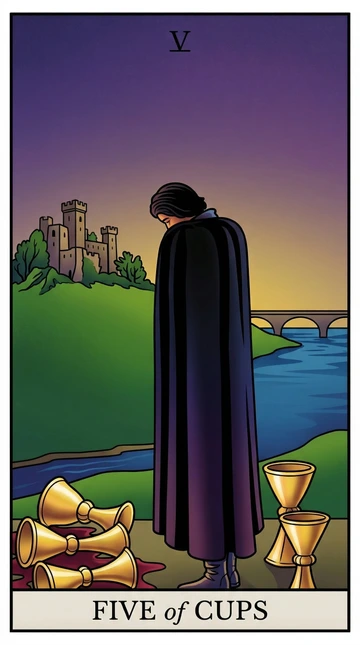
What Five of Cups signals in this area
When the Five of Cups appears in a wellbeing and health reading, it often points to a period of emotional struggle impacting one's overall state. It can signify a sense of loss or disappointment related to health goals, a current condition, or a past event that continues to cast a shadow. This might manifest as feeling disheartened about a lack of progress, grieving a past state of health, or regretting choices that have led to present challenges.
The card suggests that emotional upset, such as sorrow, regret, or a focus on what has gone wrong, is playing a significant role in one's current health landscape. It's a call to acknowledge these feelings rather than suppress them, as unaddressed emotional pain can manifest physically or impede recovery and self-care efforts. There might be a tendency to dwell on what is missing or what has been lost, potentially overlooking existing resources or opportunities for improvement.
For mental clarity, it indicates a mind preoccupied with past hurts or disappointments, making it difficult to focus on the present or plan for the future. In self-care, it can mean neglecting personal needs due to emotional overwhelm or a feeling of 'what's the point'. Regarding rest, it suggests restless sleep or a general lack of restorative rest, often due to emotional turmoil. For emotional balance, it highlights an imbalance caused by an overemphasis on negative experiences.
When Five of Cups appears reversed
A reversed Five of Cups in a wellbeing and health context suggests a turning point. It indicates that the individual is beginning to process and release the grief, regret, or disappointment that has been holding them back. There's a nascent movement towards acceptance and a willingness to let go of past emotional burdens.
This reversal can signal the beginning of emotional healing, a readiness to forgive oneself or others, and a shift in perspective from focusing on what's lost to appreciating what remains. It might mean finding closure regarding a health setback, moving past a period of self-blame, or finally seeking support for emotional pain. It points to a renewed hope and a gradual return to emotional equilibrium, suggesting that the worst of the emotional storm is passing.
Questions to ask yourself
- What past health disappointments or regrets am I still holding onto?
- How might my current emotional state be impacting my physical wellbeing or self-care routines?
- What small steps can I take to acknowledge and begin to process any lingering sorrow or regret?