What Five of Pentacles signals in this area
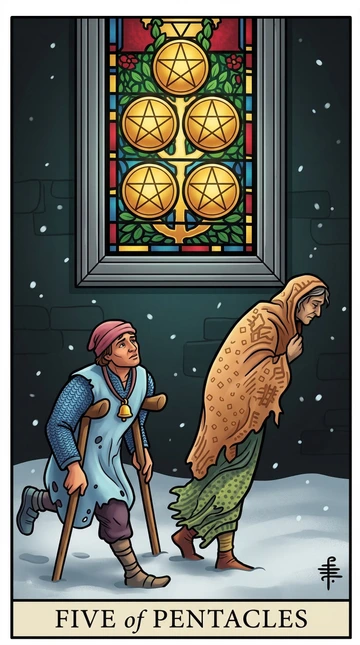
The Five of Pentacles traditionally points to a sense of lack or struggle. In the context of wellbeing and health, it often indicates feeling left out in the cold, unsupported, or experiencing a period of depletion. Physically, it might suggest a chronic ailment that leaves one feeling vulnerable, or a lack of resources to address health concerns effectively. It can also point to neglecting basic physical needs due to other pressures.
Mentally, this card speaks to a state of worry, anxiety, or feeling mentally 'poor' – perhaps struggling with clarity, focus, or a sense of hopelessness. There might be a perception of being unable to find solutions or feeling mentally overwhelmed by circumstances. For self-care and rest, the Five of Pentacles often highlights a significant deficit. It can mean that self-care practices have fallen by the wayside, or that restful periods are scarce, leading to burnout. There's a feeling of not having enough energy or time to look after oneself properly.
Emotionally, this card can signal a period of emotional hardship, loneliness, or feeling isolated from support networks. It suggests a sense of emotional poverty, where one might be struggling to find comfort, connection, or a sense of belonging. The overall message is one of enduring a difficult period, often with a feeling of being overlooked or without adequate help.
When Five of Pentacles appears reversed
A reversed Five of Pentacles in a wellbeing and health context often indicates a turning point or a shift away from the challenging circumstances it represents upright. It can signal finding a way out of a period of hardship, accessing much-needed support, or beginning to heal from a physical or emotional struggle. This reversal might suggest that resources are becoming available, or that one is starting to see solutions to previously intractable problems.
It can also imply a renewed willingness to seek help or accept assistance, breaking free from a sense of isolation. There's a potential for recovery, for finding warmth after a cold spell, or for rebuilding one's physical and mental reserves. While the struggle might not be entirely over, the reversed card suggests movement towards an improved state of health and wellbeing, often through external aid or a change in perspective.
Questions to ask yourself
- Where do I feel a sense of lack or vulnerability in my health?
- What support might I be overlooking or resisting?
- How can I begin to tend to my basic physical and emotional needs?