What Four of Pentacles signals in this area
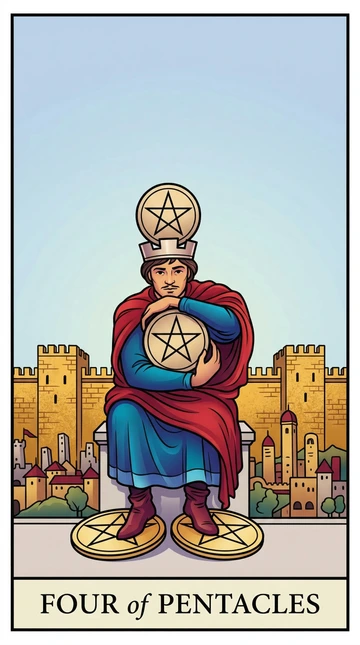
The Four of Pentacles, when appearing in a wellbeing and health context, often points to a desire for, or an established state of, stability and security. Physically, it can suggest a need to conserve energy or resources, perhaps holding onto routines that feel safe, even if they might not be entirely beneficial. It can also indicate a cautious approach to new treatments or health advice, preferring the familiar.
Mentally, this card might highlight a fixed mindset or a reluctance to consider alternative perspectives regarding one's health. There can be a strong focus on maintaining mental clarity through established methods, sometimes to the exclusion of exploring new ideas or therapies.
In terms of self-care and rest, the Four of Pentacles can indicate a tendency to stick rigidly to a self-care routine, or perhaps even hoard time for oneself, potentially isolating slightly. It might also suggest being overly guarded with one's personal space and energy, sometimes leading to a lack of spontaneity or openness. Emotionally, it can signal a holding onto feelings, perhaps out of a need for control or a fear of vulnerability, which might hinder true emotional balance.
When Four of Pentacles appears reversed
When reversed, the Four of Pentacles can suggest a loosening of control or a breakdown of established boundaries. Physically, this might manifest as a less rigid approach to diet or exercise, or perhaps a sudden release of pent-up energy. It could also indicate a greater willingness to try new health practices or let go of outdated routines.
Mentally, a reversed Four of Pentacles might point to a release of fixed ideas, allowing for more mental flexibility and openness to new information. It can signal a willingness to challenge one's own assumptions about health.
Regarding self-care and rest, the reversed card could indicate a letting go of overly strict self-care routines, potentially leading to more spontaneous and adaptable practices. Emotionally, it might suggest a release of guarded feelings, allowing for greater emotional expression and a more fluid emotional state. It can also highlight a need to re-establish healthy boundaries after a period of oversharing or feeling exposed.
Questions to ask yourself
- Where in your life are you holding on too tightly to routines or beliefs about your health?
- Are you open to new approaches to physical or mental wellbeing?
- How might a more flexible approach benefit your emotional balance?