
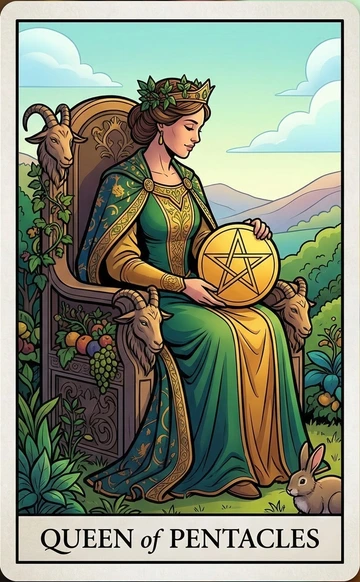
What Queen of Pentacles signals in this area
The Queen of Pentacles, when appearing in a reading about love and relationships, often points to a grounded, stable, and nurturing energy. This card suggests a focus on creating a secure and comfortable environment for a partnership to flourish. It speaks of practical acts of love and care, rather than grand romantic gestures. Think of a partner who consistently provides support, manages the household, or ensures financial stability.
This card can represent a person who is deeply committed to their loved ones, offering unwavering loyalty and a steady presence. They are often resourceful and capable, making sure the practical needs of the relationship are met. In terms of attraction, the Queen of Pentacles might indicate an appeal towards individuals who are reliable, down-to-earth, and possess a strong sense of responsibility. Emotional bonds here are built on trust, mutual support, and a shared vision for a stable future. It’s about building a home, both literally and figuratively, with someone you can depend on.
When Queen of Pentacles appears reversed
When the Queen of Pentacles appears reversed in a relationship context, it can indicate a potential imbalance in the nurturing or practical aspects of a connection. There might be a feeling of being overwhelmed by responsibilities, leading to neglect of one's own needs or those of a partner. It could suggest a lack of practicality, perhaps being too focused on material possessions to the detriment of emotional connection, or a failure to provide necessary support.
Alternatively, a reversed Queen of Pentacles might point to a smothering or overprotective tendency, where care becomes controlling rather than supportive. There could be an insecurity regarding one's ability to provide or receive love, leading to clinginess or a withdrawal of affection. It can also highlight a struggle with self-care within a relationship, where one consistently puts others' needs before their own, leading to burnout and resentment.
Questions to ask yourself
- How am I cultivating security and comfort in my relationships?
- Am I offering practical support, or is my care becoming overwhelming?
- Where might I need to find more balance between nurturing others and nurturing myself?