
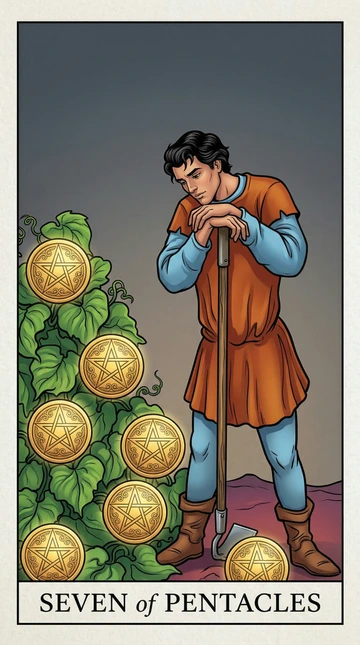
What Seven of Pentacles signals in this area
The Seven of Pentacles, when appearing in discussions about finances and abundance, points towards a period of assessment and patient waiting for returns on past efforts. It's a card that highlights the importance of a long-term perspective regarding investments, savings, or business ventures. You may have put in significant work and now find yourself observing the progress, perhaps feeling a little impatient but understanding that growth takes time.
This card often suggests that immediate gratification is not the path to true financial security. Instead, it encourages perseverance and a steady hand. It might relate to a portfolio slowly appreciating, a business gradually building its client base, or a savings plan steadily accumulating. The focus is on the seed that has been planted and the expectation of a future harvest, rather than an instant windfall. It asks for a careful review of what has been sown and whether the current trajectory aligns with your financial goals.
When Seven of Pentacles appears reversed
A reversed Seven of Pentacles in a financial context can indicate frustration with slow progress or a sense of wasted effort. You might be feeling discouraged by a lack of visible returns despite your hard work, leading to impatience or a desire to abandon a project too soon. It could also suggest a poor investment choice, where the expected growth is simply not materialising, prompting a need to cut losses or re-evaluate the strategy entirely.
Sometimes, the reversal points to an inability to see the long-term picture, focusing too much on immediate gains or losses rather than the broader financial journey. It might highlight a tendency to jump from one opportunity to another without giving anything enough time to mature. This could also be a warning against putting too much effort into something that will never yield a worthwhile return, advising a re-evaluation of where time and resources are being allocated.
Questions to ask yourself
- Am I giving my financial efforts enough time to mature?
- Where am I investing my energy and resources, and what returns do I expect?
- Am I truly patient, or am I seeking immediate gratification?