
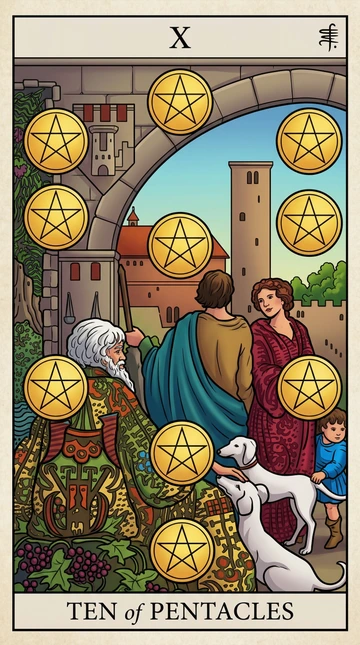
What Ten of Pentacles signals in this area
The Ten of Pentacles, when appearing in a reading about wellbeing and health, often points to a sense of established stability and long-term security. It suggests that foundational aspects of one's health are robust and well-supported, perhaps through good routines, family support, or a stable living environment. Physically, it can indicate a strong constitution, good genetic health, or the benefits of a healthy lifestyle cultivated over time. There's a feeling of having 'good roots' and a strong base from which to maintain health.
Mentally and emotionally, this card speaks to peace of mind derived from security and belonging. It can signify emotional balance that comes from a supportive family or community, a sense of legacy, or feeling settled in one's life circumstances. Self-care routines might be well-integrated and habitual, passed down through generations, or simply a consistent part of daily life. Rest is likely to be adequate and restorative, contributing to overall physical and mental resilience. The card highlights the cumulative benefits of consistent, positive choices in these areas.
When Ten of Pentacles appears reversed
A reversed Ten of Pentacles in a health context can suggest disruption to established health patterns or a feeling of instability. This might manifest as a breakdown in family support systems that previously contributed to wellbeing, or a sense of detachment from one's roots. Physically, it could point to a lack of consistent care, generational health issues coming to the fore, or discomfort within one's living environment impacting health. There might be a feeling of being unmoored or lacking a solid foundation.
Mentally and emotionally, the reversed card could indicate anxiety about financial security impacting mental peace, or family disagreements causing emotional distress. Self-care routines might have fallen by the wayside, or there could be a struggle to establish healthy habits. Rest might be elusive due to external pressures or internal worries. It highlights a potential need to re-evaluate what truly constitutes security and support for one's wellbeing, and to address areas where stability feels compromised.
Questions to ask yourself
- How do my family and community support my wellbeing?
- What long-term health habits have I established, and are they still serving me?
- Am I truly feeling secure and settled in my current health and lifestyle?