
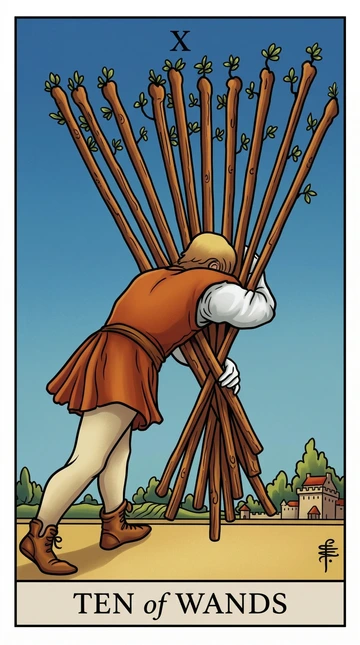
What Ten of Wands signals in this area
The Ten of Wands in a financial context often points to a significant workload or an overwhelming sense of responsibility concerning money. This card suggests that one might be carrying a heavy burden related to their income, investments, or general financial management. It’s not necessarily about a lack of resources, but rather the effort required to maintain or acquire them.
This could manifest as working excessively long hours to meet financial obligations, taking on too many projects, or feeling the weight of supporting others financially. There might be a feeling of being stretched thin, constantly juggling multiple financial demands without much respite. The card highlights the sheer effort involved, sometimes to the point of exhaustion, in keeping one's financial situation afloat or striving for more abundance. It implies a need to recognise the limits of one's capacity.
When Ten of Wands appears reversed
When the Ten of Wands appears reversed in questions about finances, it can signal a release from a heavy financial burden or the successful completion of a demanding financial project. This might mean paying off a significant debt, finalising a complex transaction, or finding a way to delegate financial responsibilities.
Alternatively, it could indicate an inability or unwillingness to carry a financial load any longer. This might lead to shedding responsibilities, perhaps by simplifying one's lifestyle, reducing expenses, or even stepping back from a demanding role. The reversed card can also suggest a refusal to acknowledge an existing financial burden, leading to further complications down the line, or simply an awareness that the current financial juggling act is unsustainable.
Questions to ask yourself
The Ten of Wands invites reflection on the sustainability of one's financial efforts and the true cost of pursuing material goals. It prompts a look at whether the current approach to earning and managing money is causing more stress than benefit.
It encourages considering if the perceived burdens are self-imposed or genuinely necessary, and whether there are opportunities to lighten the load without compromising security. This card also asks whether the pursuit of more is leading to a state of being overwhelmed rather than truly abundant.
- Where are my financial responsibilities becoming a burden?
- Am I taking on too much to maintain my current financial situation?
- What could I release or delegate to ease my financial load?