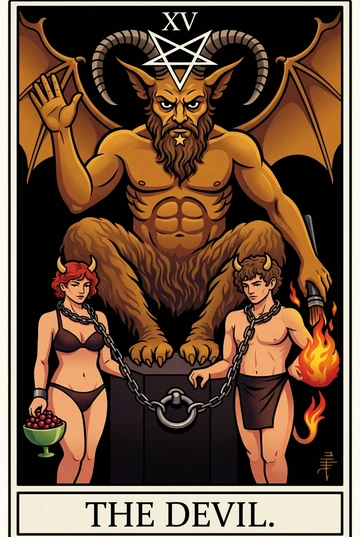
What The Devil signals in this area
When The Devil appears in a reading concerning wellbeing and health, it often points to areas where one might feel trapped or beholden to unhelpful patterns. This isn't necessarily about external forces, but rather internal attachments or perceived limitations that are impacting physical or mental states. It can highlight self-sabotaging behaviours, addictions, or a reliance on coping mechanisms that offer temporary relief but long-term detriment.
For physical health, it might suggest ignoring symptoms, sticking to an unhealthy diet, or a lack of motivation to exercise due to a feeling of being 'stuck' in current habits. Mentally, it could indicate obsessive thought patterns, anxiety fuelled by perceived constraints, or a refusal to acknowledge difficult truths. In terms of self-care and rest, The Devil can signal a neglect of personal needs, perhaps driven by a sense of obligation or a belief that one doesn't 'deserve' rest. Emotionally, it might point to codependency, suppressed feelings, or a fear of breaking free from toxic relationships that drain energy and peace.
When The Devil appears reversed
The Devil reversed often signifies a turning point or a moment of awakening regarding these attachments. It suggests a growing awareness of the chains that bind and a burgeoning desire to break free. This can manifest as a sudden clarity about an unhealthy habit, a decision to seek help for an addiction, or a newfound strength to set boundaries.
While still challenging, the reversed Devil indicates movement towards liberation. It’s about recognising one's own power to change circumstances, even if the path ahead requires significant effort. This might involve confronting shadow aspects, acknowledging uncomfortable truths, or consciously choosing to detach from what no longer serves one's highest good. It’s a sign that the individual is beginning to reclaim their agency in their health journey.
Questions to ask yourself
The presence of The Devil, upright or reversed, invites introspection into your relationship with your own choices and perceived limitations. It prompts an honest assessment of where you might be giving your power away or clinging to what no longer serves your health.
- What habits or beliefs are holding me back from better health?
- Where do I feel trapped in my current physical or mental state?
- What am I unwilling to confront about my wellbeing choices?