
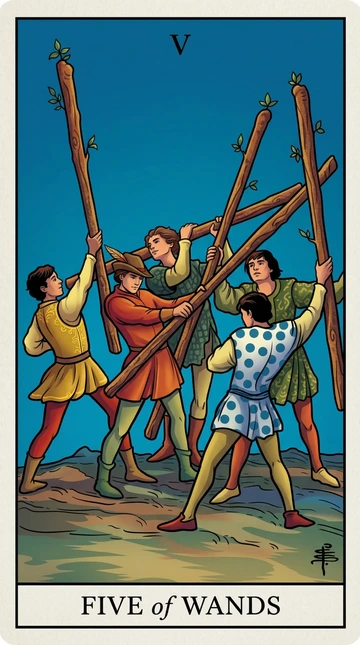
What Five of Wands signals in this area
The Five of Wands in a relationship context often points to a period of lively, sometimes challenging, interactions. It doesn't necessarily indicate severe conflict, but rather a clash of wills, differing opinions, or competitive energies within a connection. This could manifest as playful banter that occasionally crosses a line, or more serious disagreements about shared goals, values, or domestic arrangements.
For those seeking a relationship, the Five of Wands can suggest a competitive dating scene, where multiple individuals are vying for attention. It might also highlight internal struggles about what one truly desires in a partner, leading to indecision or conflicting priorities. In an existing relationship, it can signal a need to address underlying tensions before they escalate. The card encourages open communication, even if it feels uncomfortable, to navigate these differences constructively. It’s about finding a way to harmonise distinct perspectives rather than allowing them to create division.
When Five of Wands appears reversed
When the Five of Wands appears reversed in a love and relationships reading, it can indicate a resolution to previous conflicts or a retreat from confrontation. This might mean arguments are finally settling down, or that individuals are choosing to avoid conflict altogether, sometimes to their detriment. It could suggest a period of ceasefire, where unspoken tensions linger beneath the surface, or a feeling of exhaustion from ongoing disagreements.
Alternatively, the reversed Five of Wands can point to an inability to engage in healthy debate, leading to suppressed frustrations that might erupt later. There might be a sense of unfairness or that one party is dominating the relationship, stifling the other's voice. It encourages an examination of whether peace is being achieved genuinely, or if issues are merely being swept aside.
Questions to ask yourself
The Five of Wands invites reflection on the dynamics within your romantic connections. It asks you to consider how you engage with differing viewpoints and whether your interactions are fostering growth or resentment.
Are current disagreements leading to understanding or further division?
Is there a healthy outlet for competitive energies within the relationship?
Am I avoiding necessary conversations to maintain superficial peace?