
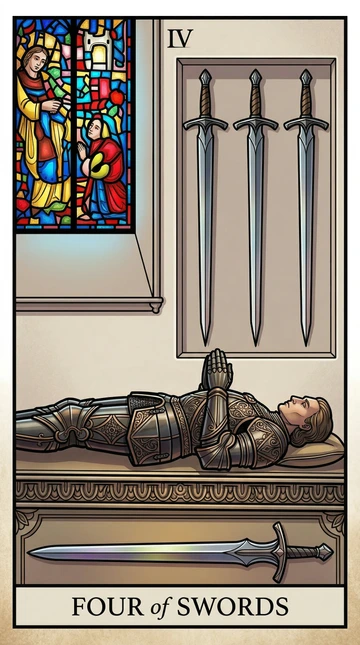
What Four of Swords signals in this area
The Four of Swords, when appearing in questions about career and ambition, often points towards a necessary pause or period of recuperation. This is not a signal of defeat or giving up, but rather an indication that a break is essential for clarity and strategic planning. It suggests you might be feeling mentally fatigued from ongoing professional challenges, a demanding project, or a period of intense focus. Taking time away from the immediate pressures allows for mental space to process recent events, consolidate learning, and consider future directions without distraction.
This card can also highlight the need for a strategic retreat from a competitive environment or a difficult situation at work. It encourages you to step back and observe, rather than engaging directly. For creative projects, it might mean putting the work aside for a while to gain perspective, allowing ideas to incubate naturally. It’s about conserving energy and resources, preparing for the next phase with renewed focus.
When Four of Swords appears reversed
A reversed Four of Swords in a career context can suggest a resistance to taking a much-needed break, or an inability to find true rest. You might be pushing through exhaustion, leading to burnout and diminished returns on your efforts. It can also indicate a restless mind that struggles to disengage from work worries, even when attempting to rest. This position might signal that the period of recovery has been too brief or ineffective, leaving you still feeling drained.
Alternatively, a reversed Four of Swords could imply a reluctance to re-engage after a period of rest, perhaps due to fear of returning to old challenges or a lack of clear direction. It might suggest that the contemplation phase has become prolonged, leading to stagnation rather than renewed purpose. There could be an urgency to act but without the necessary mental preparation.
Questions to ask yourself
The Four of Swords invites introspection regarding your professional pace and well-being.
- Am I truly allowing myself to rest and recover?
- What strategic advantage could a temporary pause offer me?
- Am I avoiding necessary action by prolonging a period of contemplation?