
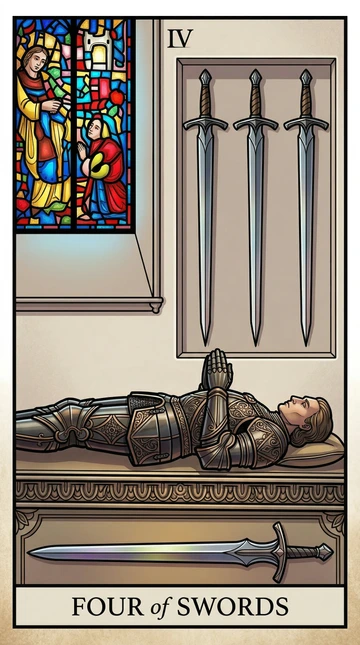
What Four of Swords signals in this area
The Four of Swords, when appearing in a financial context, often suggests a period of necessary pause or withdrawal concerning your material resources. It's not typically a card of active financial growth or decline, but rather one that points to a need for quiet assessment and strategic inactivity. This might manifest as taking a break from making significant investment decisions, postponing large purchases, or stepping back to re-evaluate your budget.
This card can indicate a time for recovery if you've recently experienced financial stress or an intense period of work related to money. It advises against impulsive actions and encourages a more deliberate, thoughtful approach to your finances. Consider it a signal to step away from the daily grind of earning or spending and dedicate time to contemplation about your long-term financial goals and security. It's about conserving energy and resources, preparing for future action rather than executing it now.
When Four of Swords appears reversed
A reversed Four of Swords in financial readings often indicates a struggle to find or take the necessary rest and reflection. You might be feeling compelled to keep pushing forward financially, even when exhausted or overwhelmed. This could lead to burnout or poor decision-making due to a lack of proper consideration. It might also signal a reluctance to address underlying financial anxieties, perhaps by avoiding a much-needed period of quiet assessment.
Alternatively, the reversed card can suggest a period of stagnation or being stuck in inaction, where the pause has become prolonged and unproductive. You might be overthinking financial matters to the point of paralysis, unable to move forward with any plan or decision. It can also point to a premature return to financial activity before you're truly ready, leading to a repeat of past issues or new challenges.
Questions to ask yourself
- Am I allowing myself sufficient time to rest and reflect on my financial situation?
- What financial decisions could benefit from a period of quiet contemplation?
- Am I avoiding necessary action by remaining in a prolonged state of inaction?