"A Brief History of Tarot Cards"
Where Did Tarot Come From?
The tarot deck as we know it has a surprisingly practical origin. Far from being created as a mystical tool, tarot cards began their life in 15th-century Italy as a game for the aristocracy. Understanding this history can deepen your appreciation of the cards and the rich layers of meaning they have accumulated over the centuries.
The Earliest Decks: Playing Cards and Parlour Games
Tarot's story begins with the introduction of playing cards to Europe, likely from the Islamic world, in the late 14th century. Standard playing card decks with four suits quickly became popular across the continent.
Around 1440, Italian nobility began commissioning hand-painted decks with an additional set of illustrated trump cards. These were used to play a trick-taking game called *tarocchi*. The most famous surviving example is the Visconti-Sforza deck, created for the Duke of Milan's family. Its gilded, intricately painted cards are now scattered across museums worldwide.
At this stage, the cards held no occult significance whatsoever. They were luxury objects - status symbols for wealthy families who could afford to commission original artwork.
The Occult Turn: 18th-Century France
Tarot's transformation from parlour game to divination tool happened in 18th-century France. In 1781, Antoine Court de Gebelin published a work claiming that tarot cards encoded secret wisdom from ancient Egypt. Though his theory had no historical basis, it captured the imagination of European occultists.
This period saw tarot adopted by secret societies and esoteric traditions. Prominent figures like Etteilla (Jean-Baptiste Alliette) developed the first tarot decks designed specifically for fortune-telling and published guides to card interpretation. The groundwork was being laid for the tarot we recognise today.
By the 19th century, tarot had become firmly embedded in the Western occult tradition. Organisations like the Hermetic Order of the Golden Dawn incorporated tarot into their practices, linking the 22 Major Arcana cards to the Hebrew alphabet, astrology, and the Kabbalistic Tree of Life.
The Rider-Waite-Smith Deck: A Turning Point
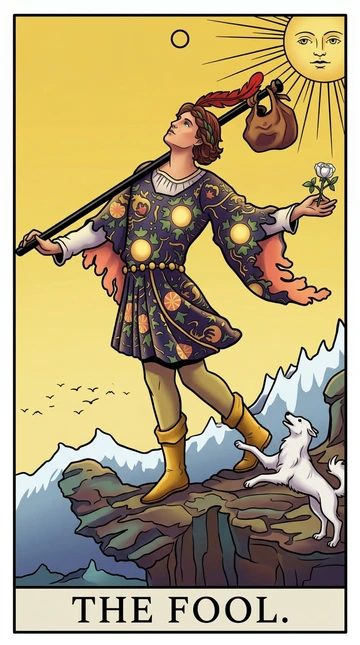
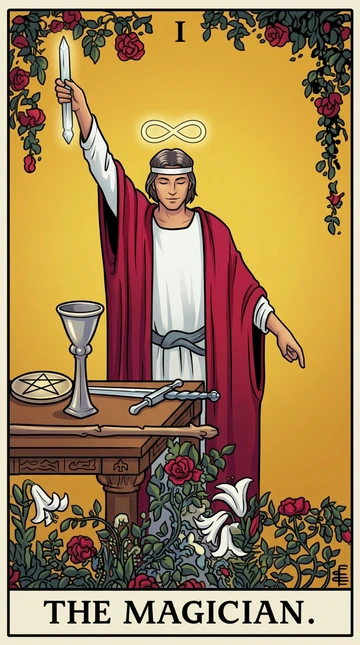
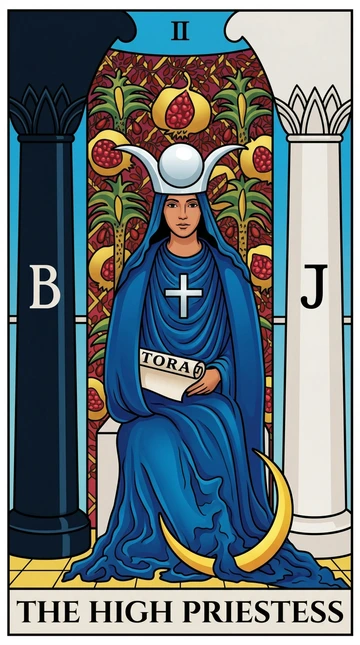
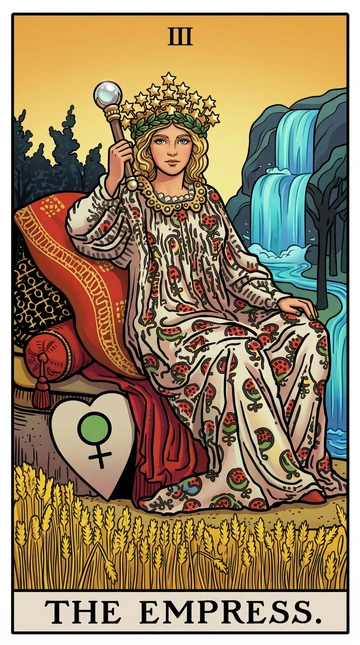
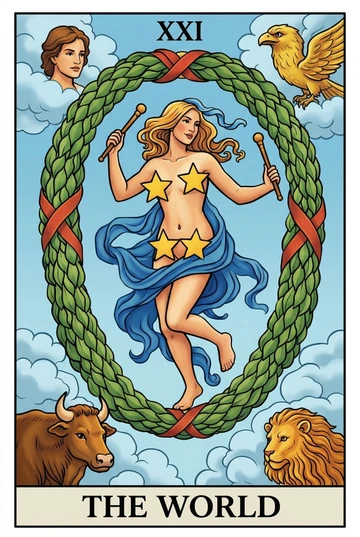
The single most influential event in tarot history occurred in 1909, when Arthur Edward Waite commissioned artist Pamela Colman Smith to illustrate a new deck. Published by the Rider Company, the Rider-Waite-Smith (RWS) deck revolutionised tarot in two crucial ways:
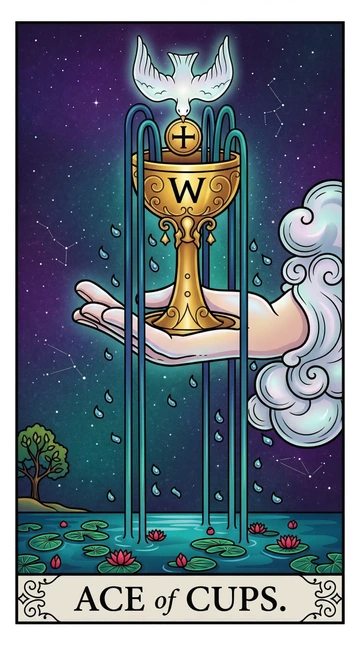
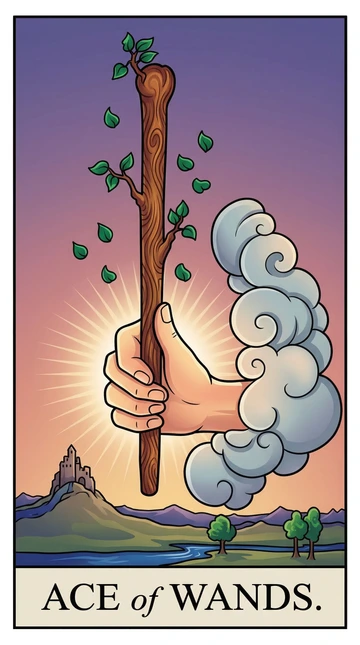
- ✱Fully illustrated Minor Arcana - Previous decks showed pip cards (like playing cards with just suit symbols). Smith painted narrative scenes on every card, making the entire deck accessible to intuitive reading.
- ✱Symbolic consistency - Waite drew on Golden Dawn teachings to create a coherent symbolic system across all 78 cards, giving readers a unified framework for interpretation.
The RWS deck remains the most widely used tarot deck in the world and the foundation upon which most modern decks are built. When you see tarot imagery in popular culture, it is almost certainly drawn from Smith's iconic illustrations.
Tarot in the Modern Era
The 20th century saw tarot evolve from a niche occult practice into a mainstream tool for self-reflection. Several developments drove this shift:
- ✱The counterculture movement of the 1960s and 70s brought renewed interest in alternative spirituality, including tarot.
- ✱The publication of hundreds of new decks made tarot accessible to diverse audiences. Decks now exist in virtually every artistic style and cultural tradition.
- ✱Psychological interpretations, influenced by Carl Jung's work on archetypes and the collective unconscious, reframed tarot as a tool for self-understanding rather than fortune-telling.
- ✱Digital platforms have made tarot more accessible than ever, allowing anyone to explore the cards without needing a physical deck or an in-person reader.
What History Tells Us
The history of tarot reveals something important: the cards have always been shaped by the people who use them. From Italian nobles to French occultists to modern seekers, each generation has brought its own meaning and purpose to the deck.
When you sit down for a tarot reading, you are participating in a tradition that spans nearly six centuries. The specific meanings and methods have evolved, but the core experience - drawing symbolic images and reflecting on what they reveal - has remained remarkably consistent.
Understanding where tarot came from can help you approach the cards with both respect and freedom. You are not bound by any single historical interpretation. The deck is a living tool, and your relationship with it is yours to define.
Explore the 78 cards and see how centuries of symbolic tradition come alive in each image.